Published: 23.06.2026
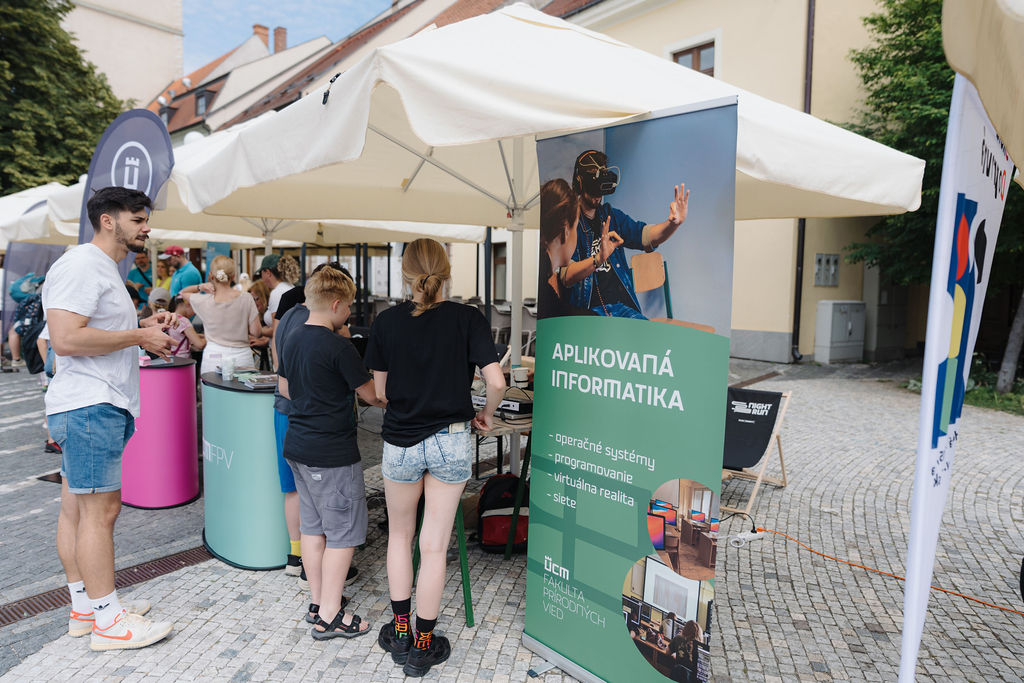
The Faculty of Natural Sciences participated in the Trnava Learning festival on June 18, 2026 with activities in the field of applied informatics and modern digital technologies.
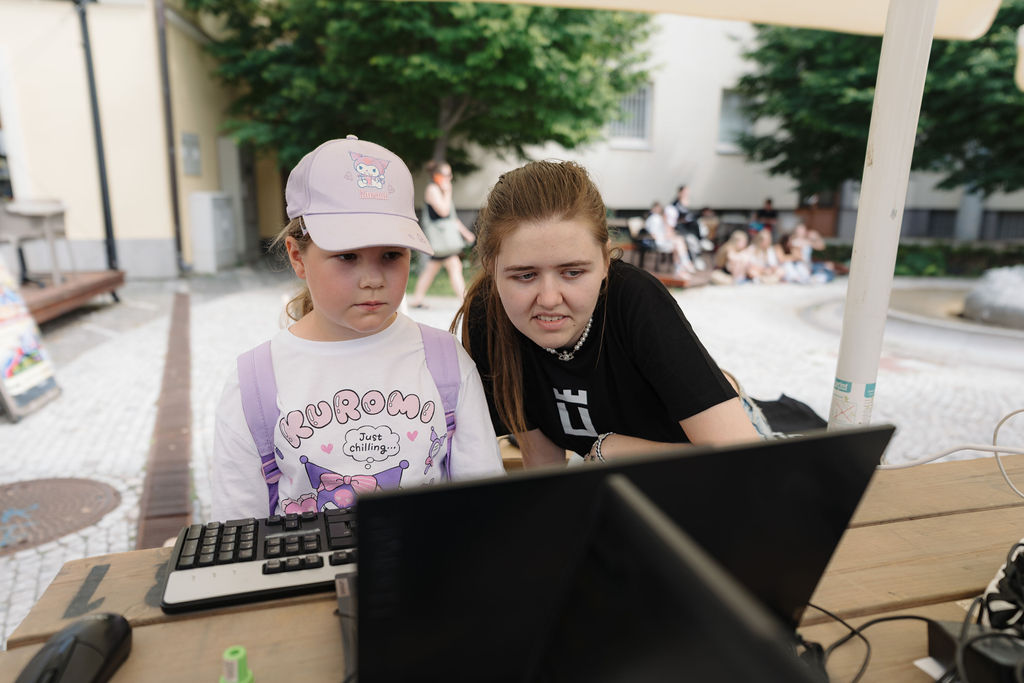
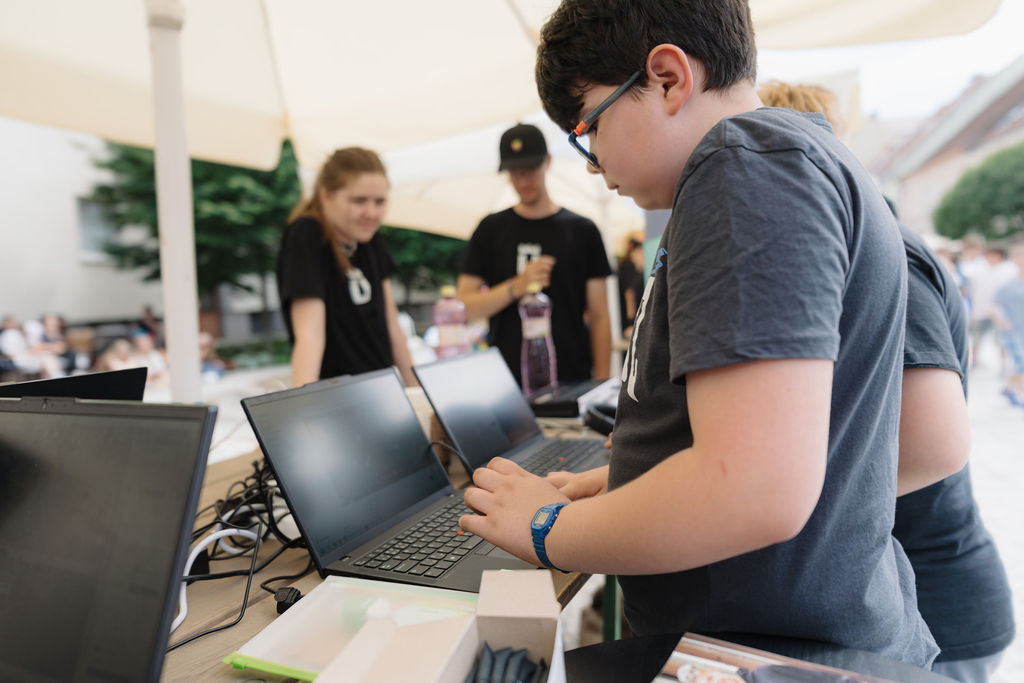
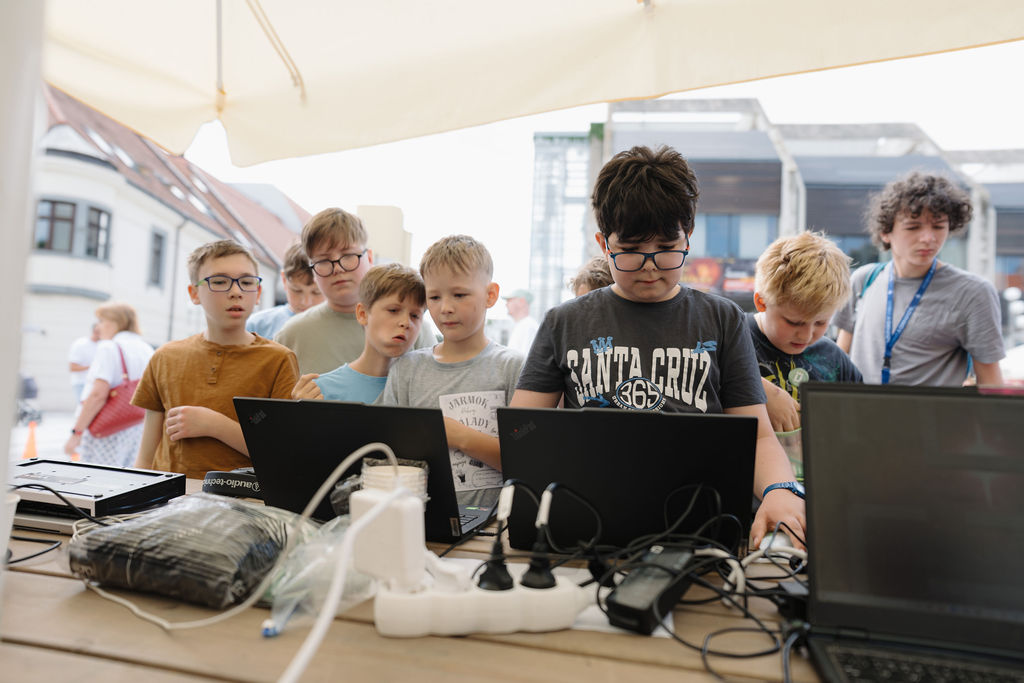
The Faculty of Natural Sciences participated in the Učiaca sa Trnava festival with activities in the field of applied informatics and modern digital technologies. Visitors could try interactive demonstrations that presented informatics as a creative, practically usable and fun field.
Great interest was aroused by an unconventional piano controlled by the mouth, where participants tried out how a computer can react to human movement and turn it into a specific action. The demo brought image processing technologies and human-computer interaction closer to each other in a simple and fun way.
The program also included an activity focused on artificial intelligence, where visitors could create a simple website using their own idea and an appropriately entered prompt. The activity showed how AI can help in the creation of digital content and why it is important to be able to clearly explain to the technology what we expect from it.
There was also a demonstration of 3D graphics and animation in the Blender environment, where the names, names of the created worlds or characters were changed into spectacular visual animations. Visitors saw that computer graphics, animations and digital effects are a natural and creative part of informatics.
We thank all the participants of the Učiaca sa Trnava festival for their interest, creativity and active participation. Thanks also go to the organizers of the event and everyone who participated in the preparation and implementation of the activities.
Participation in the event was carried out with the aim of promoting the study of informatics and increasing interest in the field of Informatics, which is included among the shortage fields supported by the Ministry of Education and Culture of the Slovak Republic.
We are looking forward to it. for the next year and for new opportunities to show that computer science can be playful, creative and accessible to everyone.