
Published: October 13, 2026
On September 17, 2026, the Faculty of Natural Sciences at the University of St. Cyril and Methodius in Trnava participated in the 25th anniversary edition of the GeoSpatial Visions 2026 conference, organized by YMS.
The event, focused on innovations in information systems, geospatial technologies, digitization, and artificial intelligence, provided an opportunity to exchange professional expertise and forge new partnerships. A significant outcome of the participation was the signing of a memorandum of cooperation between the faculty and YMS.
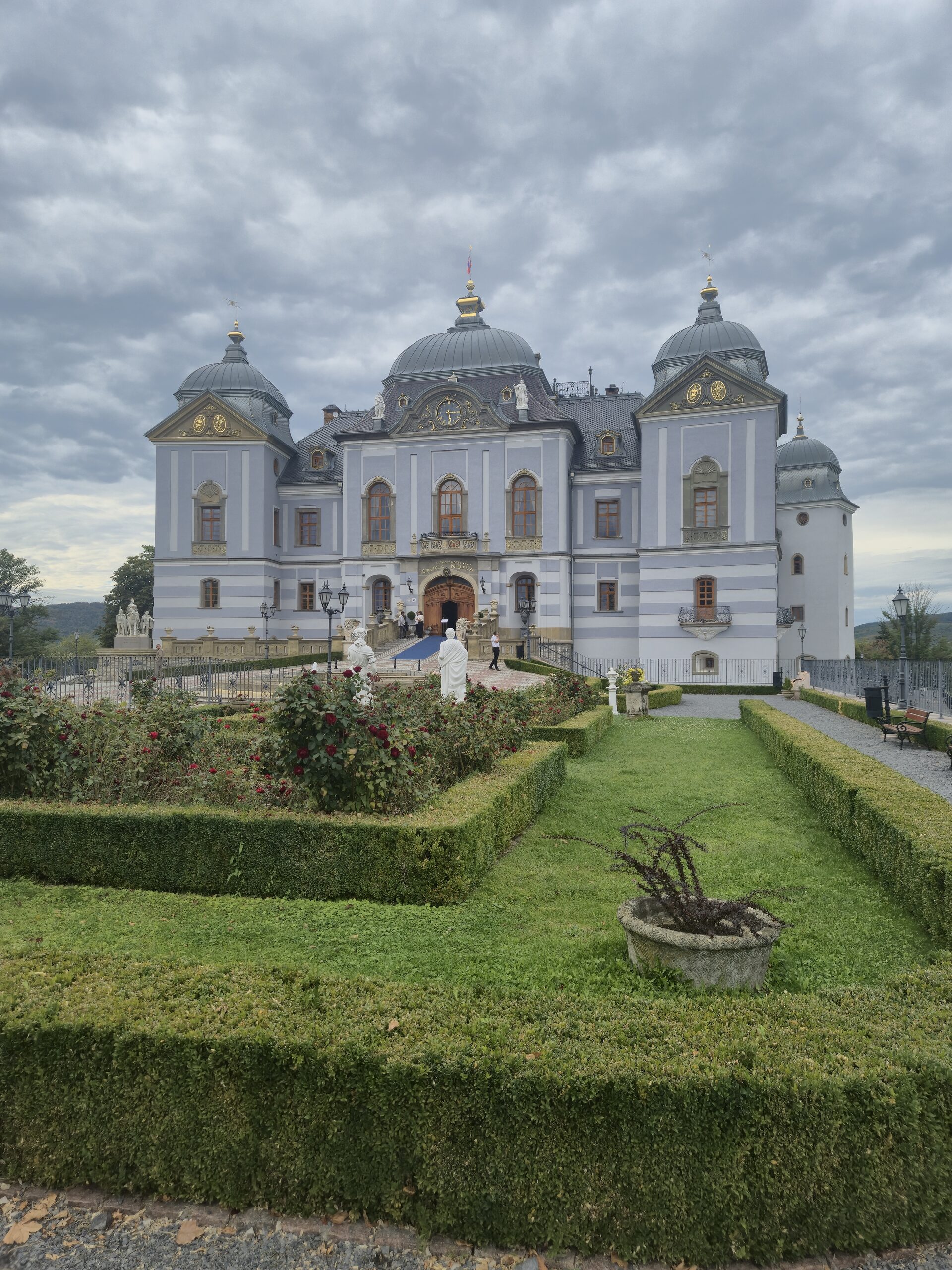
The GeoSpatial Visions 2026 conference took place on September 17–18, 2026, at the Galicia Nueva Castle Hotel in Halych. This anniversary edition was held under the main theme “Innovation in Systems, Intelligence in Data” and brought together experts in the field of information technology, representatives of public and private sector organizations, and technology companies.
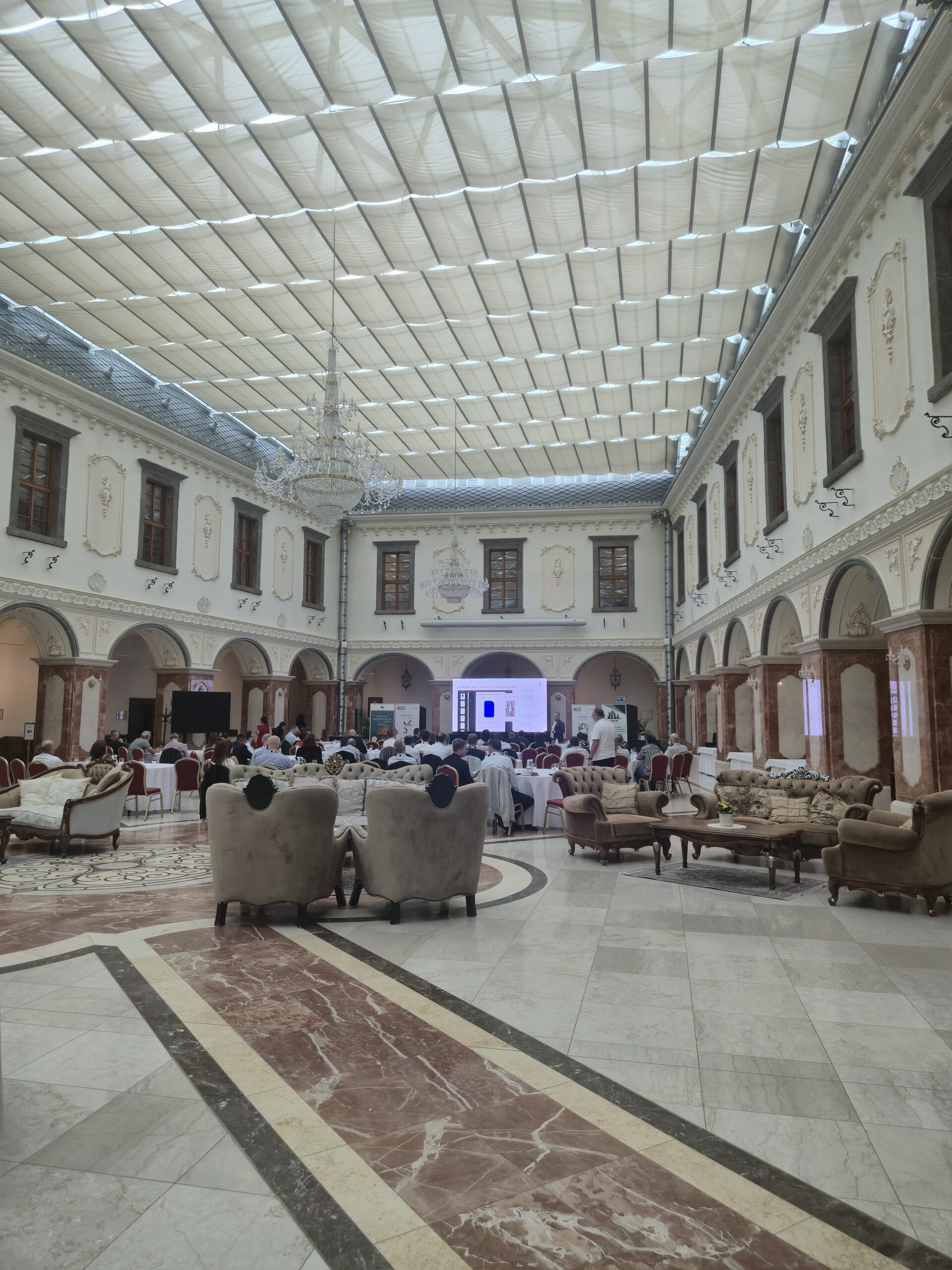
The UCM Faculty of Natural Sciences was represented at the event on September 17 by Ing. Patrik Boršoš, PhD., DSc., Vice Dean for International Relations, Partnerships, and Doctoral Studies. Participation in the conference provided an opportunity to learn about current technological trends, practical solutions, and possibilities for their application in education, scientific research, and collaboration with the professional community.
Artificial Intelligence, Geospatial Technologies, and Digitalization in Practice
The conference’s technical program focused primarily on the practical use of artificial intelligence, the modernization of information systems, and effective data management. Attention was focused on technological solutions that enable organizations to optimize processes, improve decision-making efficiency, and utilize available information to support their activities.
One of the main topics was the integration of artificial intelligence with geographic information systems (GIS). The topics presented highlighted the potential for using intelligent tools in the processing, analysis, and interpretation of geospatial data, for example in forestry, agriculture, and land management.
The program also included a lecture by Muthu Kumar, a representative of the international organization Open Geospatial Consortium, focusing on global trends in the field of artificial intelligence and geospatial systems.
Other thematic sessions addressed the new generation of process- and agenda-based information systems, the integration of map data into enterprise applications, the digitization of public administration, and the development of modern technological platforms.
For the UCM Faculty of Natural Sciences, these areas represent significant overlaps with its educational and research activities, particularly in computer science, artificial intelligence, business process modeling, information systems, and data analysis.
Signing a Memorandum of Understanding as the Foundation for Long-Term Cooperation
A key part of the UCM Faculty of Natural Sciences’ participation in the conference was the signing of a memorandum of cooperation between the UCM Faculty of Natural Sciences and YMS, which establishes a framework for the development of joint activities in the areas of education, research, and bridging the gap between academia and industry.
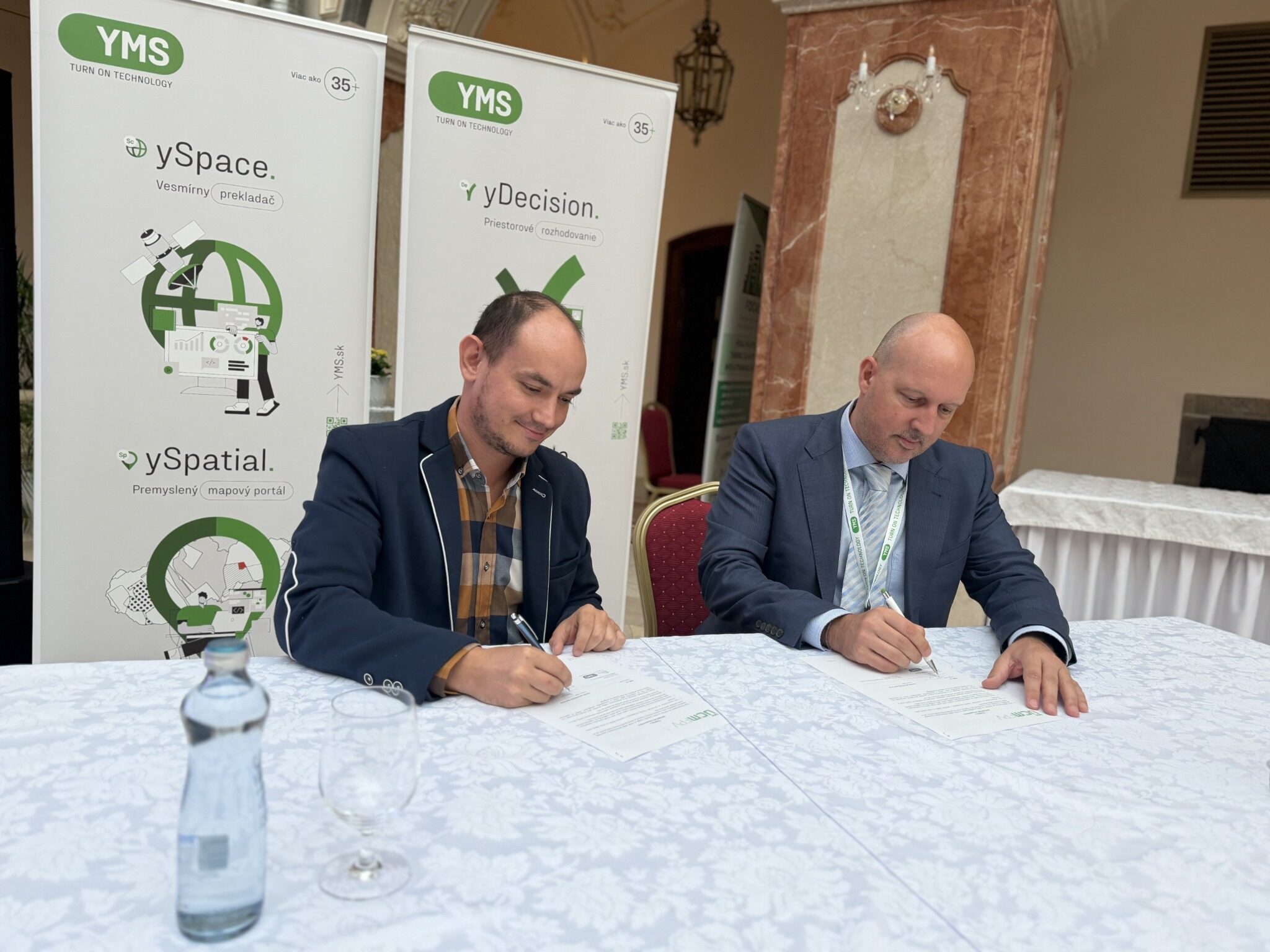
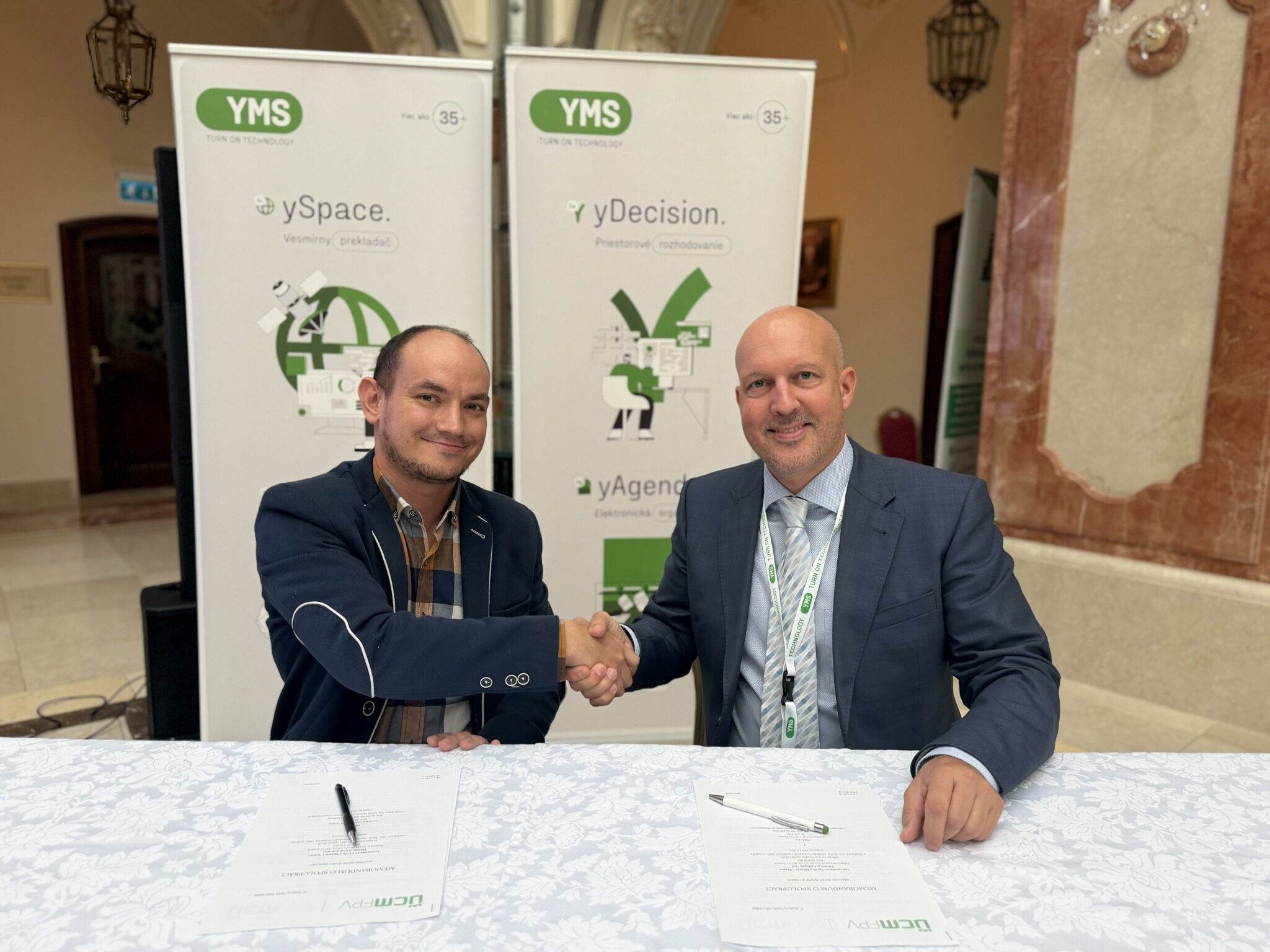
YMS operates in the field of developing and implementing information systems, geospatial solutions, and process digitization. Its professional expertise and completed projects present an opportunity to enrich the educational process with up-to-date knowledge and practical experience from the technological field.
The proposed collaboration will focus primarily on involving YMS experts in the educational activities of the Institute of Computer Technologies and Informatics at the Faculty of Applied Sciences (FPV) of UCM, organizing specialized lectures and workshops, as well as creating opportunities for students to work on practice-oriented projects.
Another important aspect of the partnership is the opportunity to link the theoretical knowledge gained during university studies with specific technological challenges and real-world needs. Students can thus gain a better understanding of how real-world information systems function, as well as the development processes and requirements that IT professionals encounter.
Opportunities for collaboration are also opening up for other departments within the faculty, particularly in areas where the academic focus of individual departments overlaps with YMS’s technological solutions and project activities.
Connecting the Academic Environment with Professional Practice
Developing partnerships with technology companies is one of the key prerequisites for modern higher education. The dynamic development of information technology and artificial intelligence creates a need to regularly update professional knowledge, respond to new technological challenges, and strengthen students’ practical skills.
In this regard, collaboration with YMS can contribute to the development of students’ professional competencies, enhance the practical focus of instruction, and create new opportunities for joint activities between faculty members and industry professionals.
Of particular importance is the potential involvement of students in projects based on the real-world needs of organizations. Such activities enable the development not only of technical knowledge but also of analytical thinking, teamwork skills, project management, and the ability to solve complex problems.
From the faculty’s perspective, another important aspect of the partnership is the opportunity to develop collaboration in the field of applied research and innovation, where the university’s academic expertise can be complemented by the partner company’s technological experience.
New Opportunities for Students and Further Development of the Faculty
Participation in the GeoSpatial Visions 2026 conference and the establishment of an official partnership with YMS represent another step in expanding the collaboration between the UCM Faculty of Natural Sciences and the external community.
The faculty is thus continuing to create conditions for a more intensive integration of higher education, scientific research, and technological practice. At the same time, the new partnership opens the door to joint initiatives that can bring tangible benefits to students, faculty, and the partner company.
The signed memorandum thus represents not only a formal confirmation of mutual interest in cooperation but, above all, a starting point for the development of joint activities, the exchange of professional expertise, and the creation of new opportunities in the fields of education, research, and innovation.


